Home / Industries / Pharmacies

Pharmacies

Accounting Software Built for Pharmacies

FinovatePro is industry-ready accounting and financial management software for pharmacies that need stronger visibility into sales, inventory, purchasing, cost of goods sold, receivables, suppliers, margins, stores and locations. It supports multi-store inventory, Transfer In and Transfer Out, committed and non-sellable stock, stock adjustments, and inventory valuation using FIFO or weighted average.

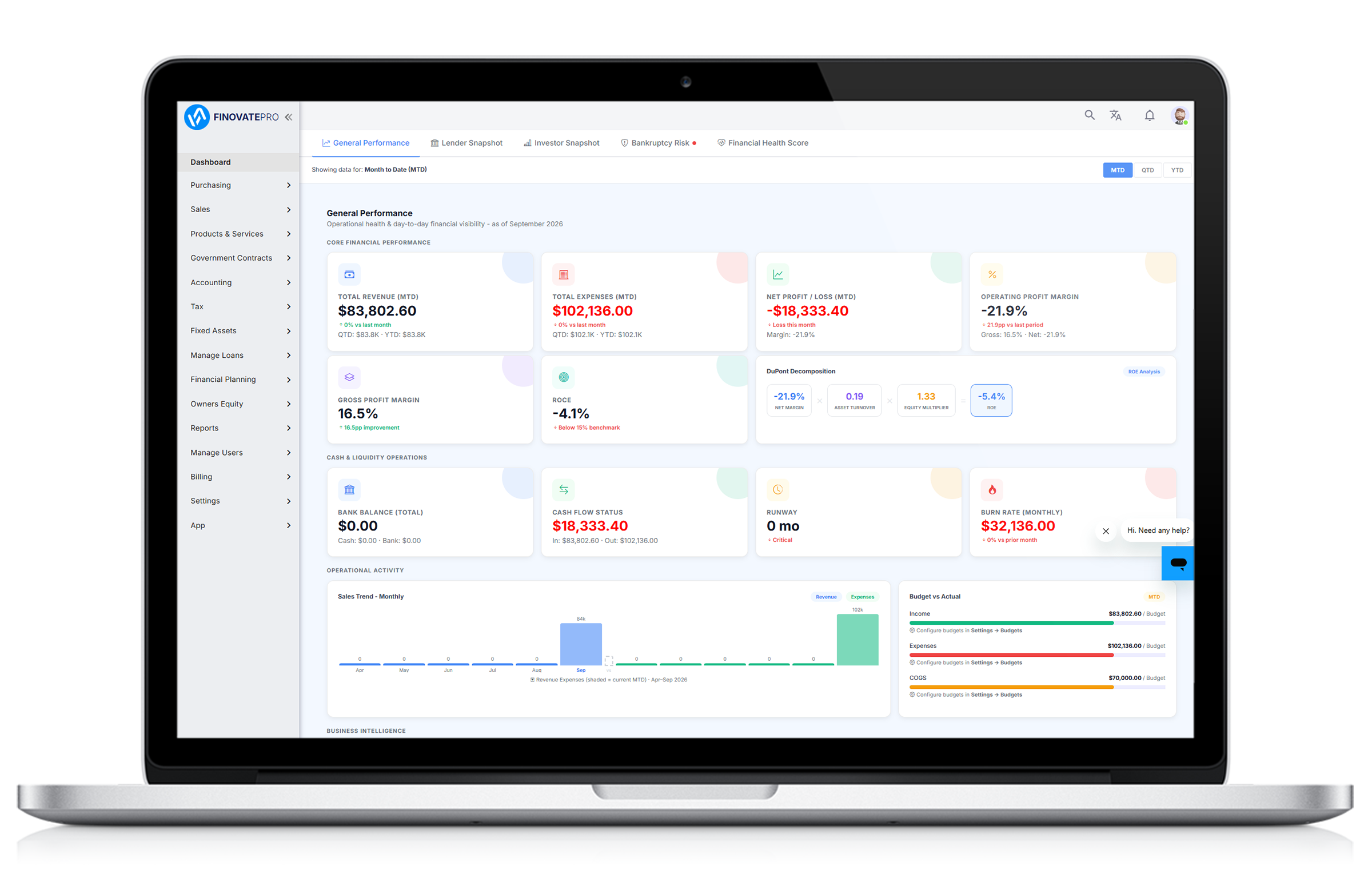
slider dashboard view2

Why it is different

Accounting Built Around Pharmacy Financial Operations

A pharmacy may combine prescription revenue, over-the-counter sales, supplier purchases, third-party receivables, cash and card collections, inventory, returns, damaged stock, committed stock, store transfers, operating expenses and multiple stores or locations. FinovatePro organizes the accounting and inventory controls around those financial activities without pretending to replace the clinical or dispensing systems used to operate the pharmacy.

Cash tied up in stock

Strong sales can hide cash locked in inventory.

Committed stock can't be sold

Reserved inventory is on hand but not available for sale.

Non-sellable items on hand

Damaged or non-sellable stock hides what is really available.

Stock moving between stores

Transfers and changing product costs affect margins.

What FinovatePro helps manage

Pharmacy Accounting Features

Pharmacy accounting is highly dependent on inventory, availability and margin control. FinovatePro is designed to make those financial and inventory relationships easier to see and control, while connecting pharmacy financial activity with the accounting records and management reports owners and finance teams need. See all features →

Pharmacy chart of accounts and revenue

Pharmacy-specific chart of accounts, prescription and over-the-counter revenue where captured, sales and receivables.

Receivables, payables and suppliers

Third-party or payer receivables where applicable and captured, plus payables, purchasing and supplier management.

Inventory by store and location

FIFO or weighted-average valuation, cost of goods sold, movement, Transfer In and Transfer Out by store and location.

Stock adjustments and availability

Committed, Return, Add and Damaged adjustments, and sellable or non-sellable stock, including at GRN.

Banking, assets and loans

Banking and reconciliation, fixed assets and pharmacy equipment, and loan management where included in the selected plan.

Margins, budgets and forecasts

Gross-margin, working-capital and profitability analysis, budgets, dashboards and cash-flow forecasting where included in the plan.

Pharmacy Inventory, Stores & Stock Control

FinovatePro supports inventory control across multiple pharmacy stores and locations. Inventory can be valued using FIFO or weighted average, moved between stores using Transfer Out and Transfer In, classified as sellable or non-sellable, and managed through defined stock-adjustment types.

Store & location control

  • Set up multiple stores and locations.
  • Select the Store Type from a dropdown during store setup.
  • Track inventory by store and location.
  • Move stock between stores using Transfer Out and Transfer In.
  • Identify non-sellable inventory when stock is received through the Goods Received Note (GRN) process.

Stock adjustment types

Stock adjustments can be created, viewed, updated and deleted. The available adjustment types are Committed, Return, Add and Damaged.

Adjustment typePurposeAccounting treatment
CommittedReserves inventory so it cannot be sold.No double entry is created for the commitment.
ReturnRecords a return through the stock-adjustment workflow.Use the approved return workflow.
AddAdds approved stock through the stock-adjustment workflow.Use the approved add workflow.
DamagedIdentifies damaged stock through the stock-adjustment workflow.Use the approved damaged-stock workflow.

Sellable vs. non-sellable inventory

Pharmacies can distinguish sellable stock from non-sellable stock. Non-sellable inventory can also be identified during the GRN process, helping the pharmacy separate stock physically received from stock that is actually available for sale.

Committed inventory

Committed inventory remains on hand but is unavailable for sale. Because commitment changes availability rather than ownership or inventory value, the commitment itself does not create a double-entry accounting transaction.

Inventory valuation

FinovatePro supports pharmacy inventory valuation using FIFO or weighted average, allowing the pharmacy to apply the configured valuation method consistently across inventory records.

Financial Visibility and Reporting

Pharmacy owners and finance teams need to know what was sold, what stock is really available, and which products, categories and stores make money.

Reports you can produce

Available reports depend on the selected plan, configuration and modules.

Accounting Standards

FinovatePro is designed to support financial reporting under U.S. GAAP and IFRS, depending on the entity and applicable reporting framework. For pharmacies, relevant accounting may include inventory guidance under ASC 330 or IAS 2 and revenue recognition under ASC 606 or IFRS 15, where applicable. The pharmacy inventory configuration supports FIFO or weighted-average valuation. Inventory accounting is especially important because slow-moving, obsolete or impaired stock can affect both the balance sheet and reported margins.

U.S. GAAPIFRSASC 330 / IAS 2ASC 606 / IFRS 15

The exact accounting depends on your entity, contracts, legal form, jurisdiction and facts. Management and accounting professionals remain responsible for complex accounting judgments.

How it works

How Pharmacy Accounting Flows

1. Receive stock

Goods Received Notes record stock, including non-sellable items.

2. Manage stores

Set up stores with a Store Type and track inventory by location.

3. Move and adjust

Transfer stock between stores and record Committed, Return, Add or Damaged adjustments.

4. Value inventory

FIFO or weighted-average valuation and cost of goods sold.

5. Report

Margins, receivables, budgets and cash flow by product, category and store.

Important Product Boundary

FinovatePro is an industry-ready financial operating system and cloud accounting platform built for small and midsized organizations, with industry-specific workflows, reporting and controls supporting U.S. GAAP and IFRS.

FinovatePro is the pharmacy’s accounting and financial operating system. It is not a prescription-dispensing system, e-prescribing platform, pharmacy benefit manager, clinical system, controlled-substance system or insurance-claims adjudication platform. Those specialized functions remain in the pharmacy-management, dispensing, payer or clinical systems. Where integrations or imports are supported, relevant financial data can be mapped into FinovatePro for accounting, reconciliation and reporting.

See Pharmacy pricing, FinovatePro multi-store inventory and financial management features and FinovatePro FAQs.

Who it’s for

Choose the plan and implementation level that fits your size, reporting needs and entity structure.

FAQs

Pharmacy Accounting FAQs

The best accounting software for a pharmacy depends on inventory volume, purchasing, receivables, locations and reporting needs. Pharmacies should look for software that connects sales, purchasing, inventory, cost of goods sold, receivables, margins and cash flow. FinovatePro is designed to organize these financial activities around pharmacy accounting.

Yes. FinovatePro supports pharmacy inventory by store and location, FIFO or weighted-average valuation, Transfer In and Transfer Out, stock adjustments, committed inventory, and sellable versus non-sellable stock. Non-sellable inventory can also be identified during the Goods Received Note (GRN) process.

Yes. When sales and product costs are captured at the required level, FinovatePro can analyze gross margin by product, category, department or location. This helps management understand whether revenue growth is translating into stronger financial performance.

Yes. FinovatePro can track receivables and aging where the underlying customer or payer balances are recorded or imported. The exact workflow depends on how the pharmacy’s dispensing or payer systems provide financial data.

No. FinovatePro handles accounting, financial reporting, controls and management information. Prescription dispensing, e-prescribing, clinical workflows and claims adjudication remain in specialized pharmacy systems.

Yes. FinovatePro supports multiple pharmacy stores and locations, including store setup with a Store Type dropdown, inventory by store, and stock movement between stores using Transfer Out and Transfer In. The number of entities, users and locations included depends on the selected plan.

Committed inventory is stock that is reserved and cannot be sold. The commitment changes availability but does not create a double-entry accounting transaction because the inventory is still owned and its value has not changed.

FinovatePro supports stock adjustment types for Committed, Return, Add and Damaged inventory. Users can create, view, update and delete stock adjustments through the stock-adjustment workflow.

Yes. Inventory can be classified as sellable or non-sellable, and the non-sellable classification is also available when inventory is received through the Goods Received Note (GRN) process.

Yes. FinovatePro supports Transfer Out and Transfer In so inventory movements between stores and locations can be recorded and tracked.

Yes. Pharmacy inventory can be valued using FIFO or weighted average based on the configured valuation method.

Know more than what you sold

See inventory by store, sellable and committed stock, transfers, adjustments, FIFO or weighted-average valuation, cost of goods sold, receivables, margins, cash flow and pharmacy financial performance in one industry-ready financial system.

Explore more

Related Industries

Retail & Distribution

Inventory, purchasing, store transfers and product margins.

General Business

Core accounting for growing small businesses.

Medical Practices

Clinical-practice finance, which differs from pharmacy finance.

Scroll to Top